
The Words We Use

words_can_hurt_or_heal1As children, many of us learn that there are words which, for a variety of reasons, should be avoided.  Not only can the use of these “taboo” words result in a terse scolding, but one might also find oneself with a mouth full of bubbles, thanks to a bar of soap. Unfortunately, some words or phrases are commonly used without a person recognizing that they are equally as offensive and/or hurtful as those seen as taboo.

In a recent blog post, JR Thorpe identifies nine mental illness phrases that should not be used.  According to Thorpe, “There are generally two reasons for eliminating mental illness terms from your common everyday vocabulary. One is that they’re plain offensive; the other is that using them in an inaccurate way spreads misinformation and creates misconceptions about a condition’s seriousness.”  Click here to read Thorpe’s article and discover how many of the words/phrases noted are part of your vocabulary.

“Patient Included”…or Not

It is becoming more common for patients to be invited to medical-related conferences. However, in an open letter to “Patients Included” conferences, Carolyn Thomas points out why many of these invitations are problematic.

Dear medical conference organizers,

Thank you so much for inviting me to participate in your conference later this year. It is a real honour to be asked to help represent the patient voice at your prestigious event. I know that inviting patients alongside your impressive international roster of well-respected physicians is new to you. So congratulations on embracing the increasingly important “Patients Included” movement sweeping through medical conferences.

But as I once wrote to patient blogger (and conference speaker) Carly Medosch:

“I can no longer afford to be ‘honoured’ by any more medical conference invitations.”

Allow me to explain:

Click here to continue reading Thomas’ letter.

Turning up the volume on the ‘patient voice’

speaker-icon-volume-psd-facelftWhen discussing topics relating to health care, the term “patient voice” is commonly used. However, what does it really mean? What is the difference between patient voice and patient engagement? Is the patient voice important? If so, why is it important and to whom is it important?

In a recent blog post found on the Association of Medical Research Charities’ website, Dr. Andrew Clempson and Melody Eaton state the following:

The patient voice is incredibly important for many of our members. We know it helps drive policy areas, and we also know that it is used widely in research – from setting strategies to informing peer review of research and helping with recruitment for studies. But the term ‘patient voice’ isn’t always clearly defined or well understood.

Click here to read the full blog post.

Is There a Cure for Paralysis?

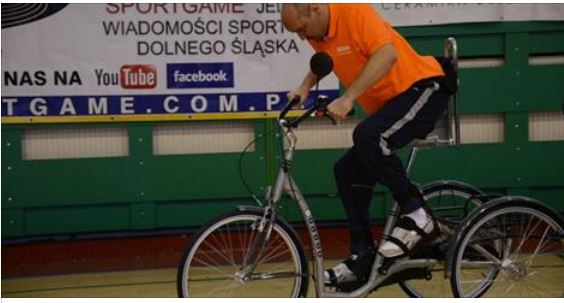
Darek FIn 2010, Darek Fidyka was paralyzed from the chest down due to a knife attack. However, in 2014, surgeons announced that Fidyka’s paralysis had been reversed by using cells from his nose to repair his spinal cord. According to Fidyka, “I can tell that sensation is coming back and I am getting stronger. A year ago I would not have been able to ride a tricycle. Now I can feel each muscle and each press of the foot on the pedals.”

The medical team that treated Fidyka is initiating a worldwide search for patients, who have specific types of spinal cord injuries, to participate in the Wrocloaw Walk Again Project. To read more about Darek Fidyka and the Wroclaw Walk Again Project, click here.

What About Physician Stories?

We often hear patient stories – how an experience affected the individual, lessons learned, fears faced, tears shed etc.  However, it is less common for us to hear physician stories.  What do doctors experience?  How do they feel?  What fears do they have?  In a recent article found in The Globe and Mail, psychiatrist David Goldbloom shares with us what it is like to lose a patient to suicide.

As I listen to Stan’s message on my voice-mail, I organize some stuff on my desk. Stan’s recorded voice sounds uncharacteristically small and hesitant. He tells me that earlier this afternoon Daryl jumped to his death from his apartment balcony.

Everything is suddenly still.

I play the message several times, listening closely for something I may have missed, but my thoughts are inexorably drawn to my meeting with Daryl two days before, seeing his wrinkled, checkered shirt, his unshaved face, his slow smile.

I sit at my desk, staring out the window, trying to think of the orderly steps of notification and documentation dictated by our policy and procedures manual. Then, in the privacy and silence of my office, I hold my head in my hands and weep. 

Click here to continue reading.

Stop Kicking the Cat

According to David Gilbert, author of the Future Patient Blog, there is an opportunity to make radical changes in the area of healthcare. This requires that people, including patients and the general public, are given their rightful responsibilities and accountability. Gilbert maintains that patients can help to improve the healthcare system. However, for this to occur, the manner in which patients are viewed, treated and the understanding and approach of patient engagement must be changed.

We do not live in normal healthcare times of course. The pressures on healthcare delivery in a changing society seem not be accompanied by any coherent vision of how to cope with those changes. The desperation for a new sense of order and the tendency to kick the cat seems actually to be increasing. Though national agencies may talk of letting go, the sense of grip and pressure felt at a local level is intense. Polarisation and power battles are inevitable.

I believe that patients can help.

Patients can be true partners for improvement and change. They can help identify what matters, rethink problems, generate solutions, model better relationships, promote better decisions and improve practice. (see, The Seven Things That Patients Bring). But, at the moment we are all hamstrung by bad habits.

The way we think about patients’ contributions is stuck in a time warp, our mindset constrained by an outmoded view of what patients can bring (or cannot). Moreover, the way we do patient and public engagement is not working – it fails to have any real impact because it is outmoded and unfit for purpose. In part, it was never designed to bring real change, but to buffer it and maintain the status quo. Now, if we really want solutions to our current healthcare challenges, this all needs to change.

Click here to read the article.

Is Patient Engagement Tokenism?


Patient engagement is a term that is commonly used in the healthcare sector. However, what does patient engagement mean? Does patient engagement mean sitting on a committee and doing nothing more than rubber stamping decisions that were made elsewhere? Is patient engagement mere tokenism?  If not, what is patient engagement and how is it promoted, facilitated and supported?

In the article, “Beyond tokenism: How hospitals are getting more out of patient engagement,” Wendy Glauser, Michelle Satsiuk and Debra Bournes explore these and other ideas.

Dear Kylie Jenner, my wheelchair is not a prop


On December 3, 2015, Emily Ladau wrote a powerful blog for salon.com.  In her post, she explained why Kylie Jenner’s photo opp, which saw her using a wheelchair as a prop, was offensive, disrespectful and distasteful.  However, according to Ladau, there was something even more problematic with Jenner sitting in a wheelchair for a magazine cover.  “The true problem lies in that a wheelchair is seen as artistic if it is graced by the rear of an established non-disabled celebrity, but actual disabled people are almost completely ignored in mainstream media.”

If you have not read this article, I encourage you to do so.  It is definitely worth the time and is apt to provide some food for thought.

Who Wins and Who Loses?

In a recent article, Daniel Schwartz looks at the issue of health transfers in Canada. In particular, what would happen if transfers were age adjusted rather than using the current criteria to determine Federal funding? Which provinces would win and which provinces would lose? Click here to discover the answer to this and other related questions.

Even in Death There is Inequality

Death is often seen as the great equalizer. However, according to  Sunita Puri, this is not the case.  Drawing from her experience as a palliative physician, Puri describes how inequalities are often present throughout an individual’s life, even when they are dying.  Unfortunately, such inequalities can make such things as end-of-life care less than ideal.  As Puri states, “We need to provide all patients – not only those who enjoy socioeconomic stability – with the comfort and dignity they deserve at life’s end, regardless of the inequalities that have shaped their lives.”  Read the full article here.