Does Time Heal?

iStock_000046442606_Small-720x504

It is often said that time heals everything. Whether this be an abrasion on one’s arm, a bout of the flu or the emptiness one can feel upon the passing of a loved one, it matters not. For every ailment that we humans experience, the common “healer” is deemed to be time. However, what if time is not the healer we assume it to be? What if time plays another role instead?

In a blog posting, Dr. Amit Sood discusses this idea. In particular, he explores whether time can heal as well as increase suffering. Click here to read Dr. Sood’s article.

Social media and health care 

twitter-doctor

There is no denying that social media has had an impact in many areas. One of these areas includes healthcare. In a recent article, entitled “Blurred lines: the General Medical Council guidance on doctors and social media,” Nick Cork and Paul Grant explore the risks and benefits of social media in healthcare, how social media can change the role of the physician and what it ultimately means to be a medical professional.

Digital technology in the early 21st century has introduced significant changes to everyday life and the ways in which we practise medicine. It is important that the ease and practicality of accessing and disseminating information does not intrude on the high standards expected of doctors, and that the boundaries between professional and public life do not become blurred through the increasing adoption of social media. This said, as with any such profound disruption, the social media age could be responsible for driving a new understanding of what it means to be a medical professional.”

Click here to read the full article.

More than an item for display

With the Olympic games and the quest for medals now complete, the question some people may be asking is:  What do athletes do with the medals they won? While it is true that many individuals are apt to place them in a special case for display, Piotr Malachowski, the Polish discus thrower, did something much different. Click here to read what he did with his silver medal.

How Do You Prepare for Death?

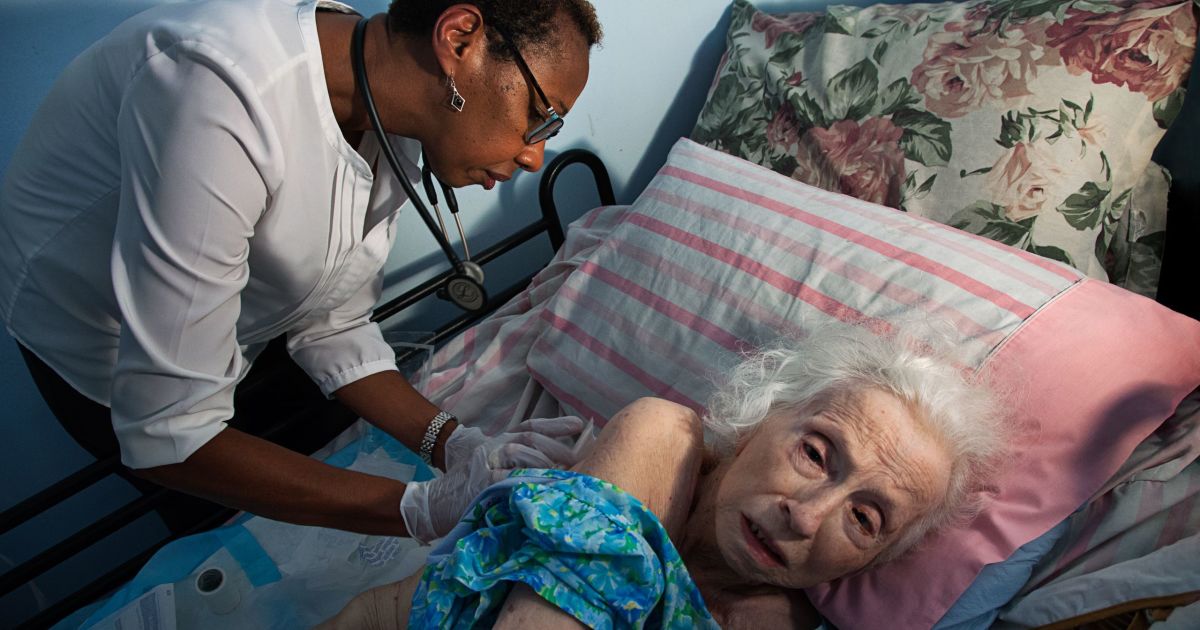
Meet Heather Meyerend, a hospice nurse who works in South Brooklyn. As such, Heather addresses people’s physical, emotional, psychological and spritual needs when they are most vulnerable.

She sees her work as preparing a patient for the voyage he is about to take, and accompanying him partway down the road. She, like most hospice workers, feels that it is a privilege to spend time with the dying, to be allowed into a person’s life and a family’s life when they are at their rawest and most vulnerable, and when they most need help. Some hospice workers believe that working with the dying is the closest you can get on earth to the presence of God.

Click here to continue reading.

Anonymous liver donor revealed

Twin girls, Bihn and Phuoc, suffered from a genetic disorder that made liver transplant the only option. After one of the girls received a liver from her father, Michael Wagner, their mother, Joanne, started a campaign to find a liver donor for their other daughter. 

Upon hearing of this situation and recognizing that like himself, Michael was in the military, Kris Chung, a 19-year-old student at Kingston’s Royal Military College, knew what he needed to do. “Most people know what’s the right thing to do, deep down inside…It was something I had to do.”

Click here to read the full story.

“This is the saddest photo I have ever taken.”

According to Ashley Bartyik, she had recently taken her saddest picture. This picture shows her grandparents, Wolfram and Anita Gottschalk, sitting together crying. The reason for their sadness is because after living together for 62 years, they are being forced to live apart.

Whenever they get a chance to visit one another, both burst into tears.

“I just want to see them together…They’re a pillar of strength in our family.”

Wolf, 83, and Anita, 81, are in separate care facilities in Surrey, B.C., and even though the regional health authority says it’s working to reunite the couple, their families fear time is running out.

Click here to read the full article.

Physicians gather to address First Nations health

At a recent event held in Vancouver, physicians came together to discuss a very important topic – namely, First Nation health.

The nearly 7,000 emotional and often tragic stories from the survivors of Canada’s residential school system gathered by the Truth and Reconciliation Commission of Canada provided a powerful backdrop to a standing-room only gathering of physicians and other health care providers at a special pre-General Council session on Indigenous health, held Aug. 20.

Truth and Reconciliation commissioner, Dr. Marie Wilson, set the tone for the discussion, saying she wanted to serve as a “channel for the survivor’s words” at the session.

“The ongoing work of truth and reconciliation going on in this country is not in fact just about Indigenous wellness,” said Wilson. “It’s about the wellness of our shared country.”

Click here to continue reading.

Autism and Workplace Success

L AutismFor an individual with autism, finding and holding a job can be very difficult. However, according to a research project conducted by Lois Rosenwald, Renee DePastino and Patrick Iben, steps can be taken to make the workplace more supportive and conducive to a person with autism. To find out about the study’s findings and recommendations, read the article, “How can we help young adults with autism thrive in the workplace?”.

What We See and Don’t See

seeingImagine what it would be like to be totally unaware that things exist in the world that cannot be seen. As such, emotions, for example, would not exist, let alone be understood. This was Kim’s reality for 54 years.

Kim’s brain is not great at seeing emotion. When she looks out at the world she physically sees all the things that most people see, but with much of the emotion subtracted. She sees the same tables, the planes, the trees … the people moving back and forth. But the feelings — particularly the subtle ones — are invisible. Though for most of her life she didn’t realize that.

“This is the interesting thing,” Kim says. “We believe our senses, so I didn’t know I was missing anything. If I’m seeing people talking and it simply looks like people are talking, why should I think that they might be feeling angry or sad or anything, if I’m not sensing that?”

However, thanks to some researchers and a magnet, Kim was able to “see” the unseeable for an hour. This hour of “seeing” has provided her with a greater understanding of the life she is living. To read the full story, click here.

Helping at a Cost?

Young man sitting looking upset 

Depression is not only difficult for the person him/herself but also for individuals who are trying to assist and support this person. Oft times, when trying to provide assistance, a person neglects his/her own needs. The question becomes, “How can one give to the other person without forfeiting oneself?” 

On HelpGuide.org, a number of suggestions are provided. All focus on supporting a depressed person while at the same time maintaining one’s own wellness and well-being. The importance of recognizing oneself while giving to another is explained in the following way. “Thinking about your own needs is not an act of selfishness—it’s a necessity. Your emotional strength will allow you to provide the ongoing support your depressed friend or family member needs.” (www.helpguide.org)