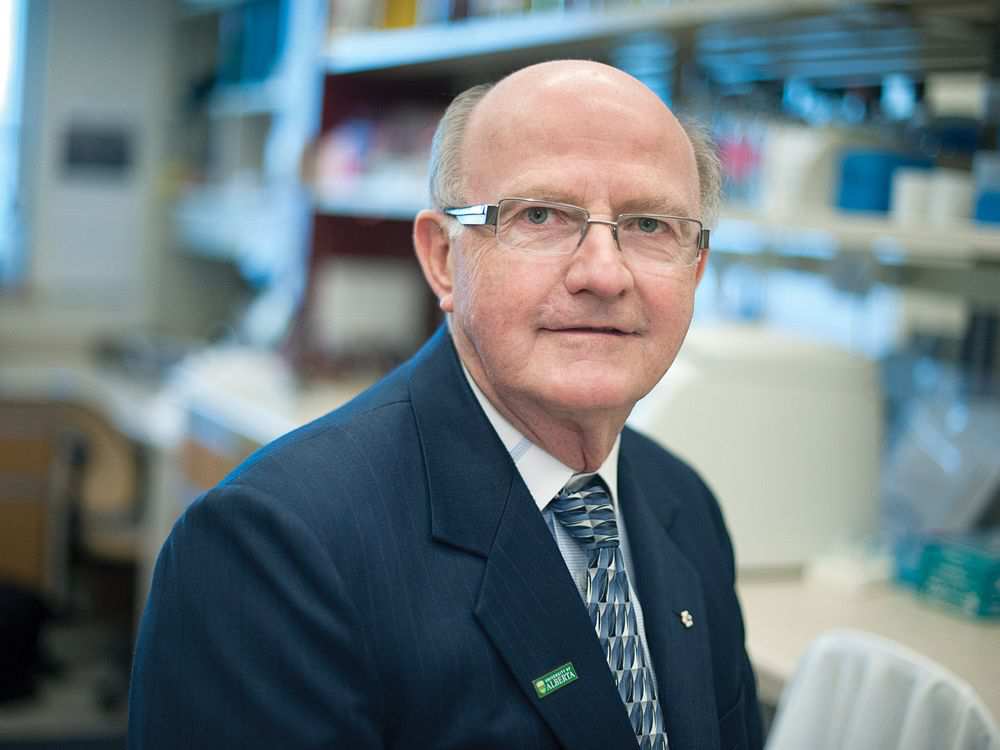
Alberta will shed top medical scientists and slash opportunities for young people training to be researchers, thanks to funding cuts.
Click here to read the article.

Alberta will shed top medical scientists and slash opportunities for young people training to be researchers, thanks to funding cuts.
Click here to read the article.
 The following was written and submitted by the Appropriate Use of Antipsychotics (AUA) project team.
* * * * *
Long-term care (LTC) sites often wait months for expert consultation on very challenging responsive behaviours (or send the person to hospital). Last November we experimented by throwing out an open invitation to our LTC contacts to help out with a case study from North zone. There were many insightful suggestions from more than 30 callers (and no one said, “Have you thought of adding more drugs?”) We wrote the case study and ideas into a report and shared with the sites. Curbside consultations have grown in popularity with 30 – 50 callers (some representing groups of up to 10 staff members) at noon and 2 pm on the 3rd Wednesday of each month. This is helping residents and staff get more timely help, is educating and empowering staff to try new ideas, and has the potential to take some pressure off the very stretched mental health consultants.
* * * * *
Click here to learn about the AUA team and their initiatives.
 Have you ever found yourself at a medical appointment trying desperately to explain to your physician what and how you are feeling? Unfortunately, no matter how hard you try, nothing you are saying is coming out right and any utterances you make are not conveying the message you want. Rather than struggling to verbalize your thoughts, why not draw them instead? This idea is explored in Damien Pollard’s article Magic Eyes.

If you are or know of someone who is:
this may be of interest to you.
Researchers at the University of Calgary are looking for 5000 low-income seniors to participate in a study that will focus on managing chronic disease. To find out more and how you can get involved, click here.
"Change Day comes to Canadian health care – but will it make a difference" – Yes it will! #ChangeDayAB @tweetvandijk https://t.co/deX10NitWI
— Patients 4 Change (@Pts4Chg) March 25, 2016
On an online blog, the topic of Change Day and its longevity and effectiveness have been raised. Are the pledges being made and the related changes sustainable or will they soon find their way into the “tried” pile. With Change Day AB ending two days ago, this article and the comments left by readers are timely indeed. Click here to read the article.

Insite is the first legal supervised interjection site in North America. Located in Vancouver, Canada, people can inject drugs in a safe place that is health focused. The goal of Insite, which is operated and funded by Vancouver Coastal Health, is to “decrease the adverse health, social and economic consequences of drug use without requiring abstinence from drug use.” (http://www.vch.ca/public-health/harm-reduction/supervised-consumption-sites Continue reading
The AUA project is an initiative of Alberta Health Services’ Seniors Health Strategic Clinical Network
Rare Disease Day is tomorrow, February 29th. What will you do to recognize the day? #RDD2016 https://t.co/Bgx7xC3iFl
— Patients 4 Change (@Pts4Chg) February 28, 2016
“Patient organisations in Canada have engaged in Rare Disease Day since its first year in 2008, arranging gala dinners and exchanges between researchers and patients, as well as regional events across Canada.
The undisputed highlight of the 2015 event was the transformation of the iconic CN Tower with blue lighting to celebrate Rare Disease Day, as was done in 2014 as well. Elsewhere in Canada local communities got together for bake sales, dinners, and research forums.
The Canadian National Alliance, the Canadian Organization for Rare Disorders (CORD), serves as the voice for the estimated 1 in 12 Canadians affected by a rare disease. They can be contacted directly to help you find a patient organisation locally which may have more information about a specific rare disease or disorder.” http://www.rarediseaseday.org/country/ca/canadae-disease-day)
The following pictures are of Melanie, an individual who suffers from the rare disease – gastroparesis.
(Pictures were submitted by D eborah, February 28, 2016.)
As Melanie’s mother, Deborah, states, “That’s what I have to look forward to every month for three days.”
 An electronic health record system is being planned for Alberta. This will connect Alberta’s 97 hospitals, its primary care networks of family physicians, and the province’s Netcare system together. In addition to cost-saving benefits, a single health information system will allow medical specialists and emergency rooms to determine important information, including what medications an individual is taking and what diagnostic tests have already been done. Albertans themselves will also be able to log in and view their health information. As one member of Pts4Chg wrote, “Linking Healthcare with Primary care with patient! Feeling in the loop.”
Although this initiative will cost hundreds of millions of dollars, according to Carl Amrhein, deputy health minister, “I’d say it’s critical.” Click here to read the full report.
In a recent article, Thomas R. Frieden notes that public health and clinical medicine should work together but all too often, this is not the case. As a means of addressing this situation, Frieden suggests that the two areas can be integrated effectively by making patients the VIPs of the system. What does it mean to make the patient the VIP? Read the article to find out.
