Patient Voices Network – Volunteer and Make a Difference

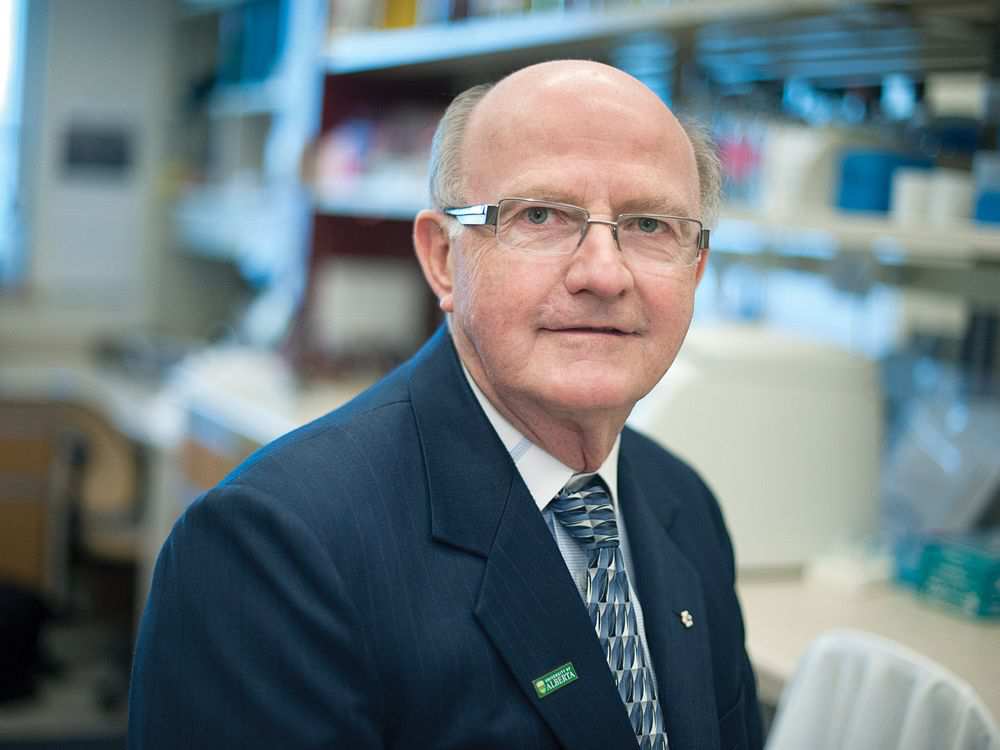
Do you live in British Columbia? Do you want to make a positive difference to the province’s health care system? If so, you may wish to explore the Patient Voices Network. Ernie Hamm is an individual who chose to do just that and is very happy that he did.

Ernie Hamm loves to lend a helping hand and he’s been thoroughly enjoying donating his time with the Patient Voices Network (PVN). The Osoyoos senior, 77, has been volunteering with PVN for more than four years and has loved every minute of it. “I just volunteer in any area where they need help,” he said. … Click here to continue.

Clinical Trials – To Participate or Not

clinicaltrial
Clinical trials are becoming more popular and as such, the demand for participants is increasing. Unfortunately, oft times patients who are being asked to participate or are considering joining are unclear about the nature of the study and what their involvement would entail. This, in turn, makes deciding whether or not to get involved in the study more difficult.

To address this issue, The Center for Information & Study on Clinical Reseach Participation has a number of questions on its website that may be of assistance to individuals contemplating clinical trial involvement. Here are five of the questions they list.
1. What is the main purpose of this study?
2. Does the study involve a placebo or a treatment that is already on the market?
3. How will the treatment be given to me?
4. How long is the study going to last and what will I be asked to do as a participant?
5. What has been learned about the study treatment and are any study results published?

To reading the list, click here. What, if any, questions would you add to this list?

You Are Invited…

Pts4Chg is presenting at the International Institute for Patient and Family Centred Care (IPFCC) conference that is occurring from July 25-27th. As part of the presentation, a Twitter exchange will be taking place. Please consider joining us in the Twittersphere to converse with conference delegates, share ideas and have fun. IPFCC2016

Date: Tuesday, July 26, 2016
Time: 11:15 a.m. EST
Location: In the Twittersphere at ‪#‎Pts4ChgNYC

Dietary Supplements-Adverse Events And Emergency Room Visits

Dietary supplements are often promoted as natural and safe. However, this is not necessarily the case.

Lamar Odom’s recent brush with death has drawn the nation’s attention to dietary supplements. The former basketball player suffered an ischemic stroke and cardiac arrest induced by cocaine and two herbal male enhancement supplements, Reload and Libimax Plus. He purchased these supplements from the brothel where he was found unconscious. What Lamar and most people don’t know is that Reload contains sildenafil also known as Viagra. And Libimax Plus contains the drug tadalafil, the same ingredient in Cialis, another prescription drug for erectile dysfunction. Dietary supplements are regulated and monitored by the FDA differently from prescription medicines. The labeling information of supplements is not strictly enforced. Information may not necessarily include all ingredients and at times, the supplements may contain less or more substances than what the labeling indicates.

Click here to continue reading.

Patient Voices Required

opportunity tags, abstract vector art illustration

If you live in or near Vernon, British Columbia and are interested in improving health care, this may be of interest to you.

The Patient Voices Network is in search of volunteers in Vernon.

The Interior Health residential care framework redesign advisory committee is looking for 10 to 14 volunteers to share experiences they’ve had with the health care system in order to provide feedback to the institution. “It’s through a patient lens,” said Carol Stathers, PVN Okanagan engagement leader.

The volunteers may also help with putting together patient educational pamphlets.

Click here to continue reading.

Are patients the health care system’s free labor?

Have you ever felt overburdened by the amount of paperwork, phone calls, e-mails, appointments, etc., associated with navigating the health care system?  If so, you are not alone.

stress1

In the article, “Unpaid, stressed, and confused: patients are the health care system’s free labor,” Sarah Kliff describes how the health care system can place considerable burden on the patient him/herself. This realization came about from her own experience managing a chronic foot injury. As Kliff explains:

What I didn’t understand was the burden patients face in managing the health care system: a massive web of doctors, insurers, pharmacies, and other siloed actors that seem intent on not talking with one another. That unenviable task gets left to the patient, the secret glue that holds the system together.

For me, this feels like a part-time job where the pay is lousy, the hours inconvenient, and the stakes incredibly high. It’s up to me to ferry medical records between different providers, to track down a pharmacy that can fill my prescription, and to talk to my insurance when a treatment gets denied to find out why.

Click here to read the full article.

Will Any Patient Advisor Do?

cog

In her blog post, Alies Maybee explores whether patient advisors are interchangeable entities – not unlike a cog in a wheel. Can patient advisors move from role to role and be seamlessly substituted for one another? Are patient advisors swappable? A portion of what she quickly discovers is found below.

As I’ve come to know some of my fellow advisors, I have concluded that in terms of skills, attributes and experience related to the business of advising, we are not all the same.

As advisors, we sometimes assess our involvement and our experience of a group differently. I venture to suggest this is in part because we are different types of advisors. Sometimes it’s like we weren’t all at the same party.

Our healthcare partners don’t often see our experience of involvement in the same way we do. Not only that, I sense they may make an assumption that all advisors experience the involvement in the same way.

My hope is that understanding the different types of advisors will bring a new level of clarity to how we choose to interact and assess those interactions.

Click here to continue reading.

‘Unacceptable failures’ in end-of-life care at nights and weekends

According to a recent study, the end-of-life care provided at nights and weekends in the United Kingdom is less than satisfactory. One reason for this is the inadequate number of palliative care specialists available. “There are nowhere near enough palliative care doctors and nurses to provide a 24/7 service across the whole of the UK – we only have 1 palliative care consultant and 5 palliative care nurses per 1000 beds” (http://google.com/newsstand/s/CBIwxsTMpio).

Is this situation unique to the UK or does it occur elsewhere as well? What is palliative care like where you reside?